Why do Papiamento and a Creole Language Spoken in Malaysia have so many similarities?

Why do Papiamento and a Creole Language Spoken in Malaysia have so many similarities?

Two presentations at the Biblioteca Nacional Aruba, Oranjestad, Aruba

Lecture in the series “Lifelong Learninig – Academic Lectures” – May, 17 2016

Diario, 09 May 2016, p. 44

IMG-20160509-WA0000

Invitation

IMG-20160510-WA0002

Diario, 2 June 2016, p. 23

IMG-20160603-WA0000

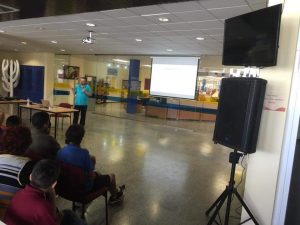
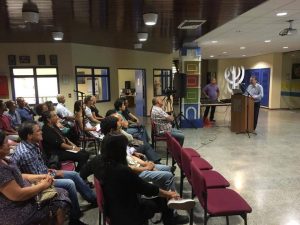
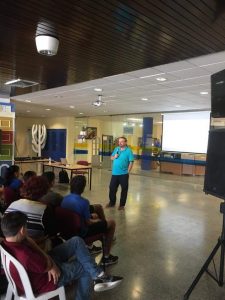
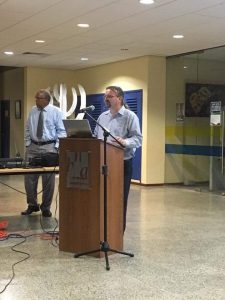
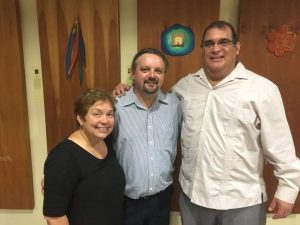
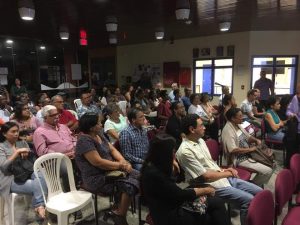
Some pictures of the two events:

2016-05-20 01.43.35 2016-05-22 14.33.24
2016-05-20 01.43.42 2016-05-22 14.32.46
2016-05-22 14.35.54 2016-05-22 14.33.46
2016-05-22 14.33.09

Abstract

Why do Papiamento and a Creole Language Spoken in Malaysia have so many similarities?

The aim of this presentation is to make relevant considerations on the origin of Papiamento (PA). The discussion on the origins of PA still is object of controversy. Some scholars classify it as a creole language of Spanish origins and others as a creole of Portuguese origins. Recent historical and linguistic evidence suggests that PA owes its origins to the West African Portuguese creoles (cf. Jacobs, Origins of a Creole 2012).

In this presentation, the author provides further evidence in favour of the Portuguese origins of PA by doing an investigation on the historical and linguistic links existing between PA and Papiá Kristang (PK). Historical links are important, but linguistic data is the most reliable evidence of possible genetic ties between creoles. It may seem strange to compare a creole language that developed in Southeast Asia with a creole spoken in former Dutch colonies in the Caribbean, since they are worlds apart. PK, a Portuguese creole spoken in Malacca, Malaysia, is not directly linked to the West African Portuguese creoles like PA, but is a Portuguese creole undoubtedly unrelated to Spanish. This fact turns PK into an interesting tool of comparison to verify possible similarities and correspondences in the PA and the PK grammatical categories, and to establish if PA carries basic Portuguese creole features. The analysis is based on linguistic data from grammars, descriptions and texts in PA and in PK. The focus are grammatical similarities and correspondences that are observed in the structure of both creoles, and the implications these have to determine a possible common origin.

To achieve this objective, a comparison of important linguistic features in the two languages will be made. The evidence suggests that the origins of PA cannot be completely analysed and understood if vital historical and linguistic links to the Portuguese language are ignored. It remains open to discussion whether these ties were solely formed via West Africa and the Portuguese creoles spoken there or not. However, this presentation intends to discard any hypothesis that excludes the fundamental role Portuguese and Portuguese creoles played in the formation of PA.


 

A formação do papeamento, suas origens portuguesas, africano-ocidentais e brasileiras

Artigo publicado

799181

A formação do papeamento, suas origens portuguesas, africano-ocidentais e brasileiras
Marco Aurelio Schaumloeffel

(Syn)thesis,v. 7, n. 2 (2014), ISSN 1414-915X
DOI  10.12957/synthesis.2014.19663
UERJ, Rio de Janeiro

Artigo em pdf

Obs.: a publicação (Syn)thesis alterou o título original, revisou o texto e preferiu usar o termo “papeamento” sem consulta após submissão do artigo. Embora alguns dicionários aceitem o termo “papeamento”, prefiro usar os termos mais correntes: “papiamento” na escrita de Aruba ou “papiamentu” na escrita adotada em Curaçao e Bonaire. Artigo publicado em dezembro de 2015.

Abstract
O objetivo deste artigo é investigar as conexões históricas que contribuíram para a formação do Papiamentu, uma língua crioula falada nas ilhas caribenhas de Aruba, Bonaire e Curaçao (ABC). Através desta análise, pretende-se mostrar que as ligações históricas do Papiamentu indicam que sua origem não se deve ao Espanhol, como muitas vezes é erradamente propagado, mas sim ao Português e aos crioulos portugueses. Estas ligações foram estabelecidas através do tráfico de escravos, o qual usava variantes e crioulos do Português como língua franca de comércio, e através das conexões diretas e indiretas estabelecidas entre as ilhas ABC, a Europa, a África Ocidental e o Brasil.
Palavras-chave: Papiamentu, História, Formação, Línguas Crioulas

Abstract
The objective of this article is to investigate the historic links that contributed to the formation of Papiamentu, a creole language spoken in the Caribbean islands of Aruba, Bonaire and Curaçao (ABC). The intention is to show through this analysis that the historic links of Papiamentu do not point towards a Spanish origin, as many times erroneously disseminated, but to Portuguese and Portuguese creoles. These links were established through the slave trade, which used Portuguese varieties and creoles as their trade lingua franca, and through the direct and indirect connections established between the ABC Islands, Europe, West Africa and Brazil.
Key words: Papiamentu, History, Formation, Creole Languages
Title in English: Formation of Papiamentu, its Portuguese, West African and Brazilian Origins

A formação do Papiamento, suas origens portuguesas, africano-ocidentais e brasileiras

Picture

Artigo publicado

A formação do papeamento, suas origens portuguesas, africano-ocidentais e brasileiras
Marco Aurelio Schaumloeffel

(Syn)thesis,v. 7, n. 2 (2014), ISSN 1414-915X
DOI  10.12957/synthesis.2014.19663
UERJ, Rio de Janeiro

Artigo em pdf

Obs.: a publicação (Syn)thesis alterou o título original, revisou o texto e preferiu usar o termo “papeamento”, sem nova consulta após a submissão do artigo. Embora alguns dicionários aceitem o termo “papeamento” e ele também esteja correto, prefiro usar os termos mais correntes: “papiamento” na escrita de Aruba (assim também consta p.ex. no Dicionário Houaiss para o Português) ou “papiamentu” na escrita adotada em Curaçao e Bonaire. Artigo publicado em dezembro de 2015.

Abstract
O objetivo deste artigo é investigar as conexões históricas que contribuíram para a formação do Papiamentu, uma língua crioula falada nas ilhas caribenhas de Aruba, Bonaire e Curaçao (ABC). Através desta análise, pretende-se mostrar que as ligações históricas do Papiamentu indicam que sua origem não se deve ao Espanhol, como muitas vezes é erradamente propagado, mas sim ao Português e aos crioulos portugueses. Estas ligações foram estabelecidas através do tráfico de escravos, o qual usava variantes e crioulos do Português como língua franca de comércio, e através das conexões diretas e indiretas estabelecidas entre as ilhas ABC, a Europa, a África Ocidental e o Brasil.
Palavras-chave: Papiamentu, História, Formação, Línguas Crioulas

Abstract
The objective of this article is to investigate the historic links that contributed to the formation of Papiamentu, a creole language spoken in the Caribbean islands of Aruba, Bonaire and Curaçao (ABC). The intention is to show through this analysis that the historic links of Papiamentu do not point towards a Spanish origin, as many times erroneously disseminated, but to Portuguese and Portuguese creoles. These links were established through the slave trade, which used Portuguese varieties and creoles as their trade lingua franca, and through the direct and indirect connections established between the ABC Islands, Europe, West Africa and Brazil.
Key words: Papiamentu, History, Formation, Creole Languages
Title in English: Formation of Papiamentu, its Portuguese, West African and Brazilian Origins


Source: Marco

Decalques do Português no Hunsrückisch falado no Rio Grande do Sul

Decalques do Português no Hunsrückisch falado no Rio Grande do Sul

Marco Aurelio Schaumloeffel

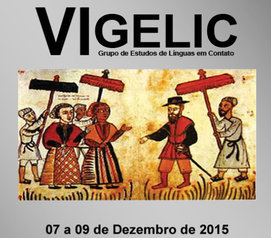
Apresentação durante o VI Encontro do Grupo de Estudos de Línguas em Contato
7 a 9 de dezPictureembro de 2015, Universidade Federal da Bahia, Salvador – BA


Resumos (Página 57)
Site do evento
PowerPoint da Apresentação: favor solicitar por e-mail
Além da apresentação, também ocorreu a participação no minicurso ‘Language contact/genesis and grammatical development” ministrado por Claire Lefebvre, Université du Québec à Montréal, Canadá.

Abstract

Decalques do Português no Hunsrückisch falado no Rio Grande do Sul

Marco Aurelio Schaumloeffel
Brazilian Studies, The University of the West Indies, Cave Hill Campus, Barbados

O objetivo deste estudo é fazer o levantamento e verificar como ocorre o processo de formação de decalques na variante alemã Hunsrückisch (HR) falada em uma comunidade bilíngue do interior do Rio Grande do Sul. O uso concomitante do Português (PT) e do HR gera um ambiente propício à interferência linguística (cf. Weinreich 1953 10; Juhász 1980) recíproca. Os decalques são o resultado sedimentado das interferências linguísticas que ocorrem em comunidades bilíngues (Schaumloeffel 2007 47) e consistem, especificamente neste estudo, na tradução de empréstimos, na ressemantização (Biderman 2006 36) de termos vindos do PT. Em vez de simplesmente serem adotadas as palavras ou as expressões do PT, como, p.ex., na apropriação lexical, é feita a substituição e elementos correspondentes da língua receptora passam a ser usados. Quando ocorre o decalque, não ocorrem apenas processos semânticos, mas também sintáticos e pragmáticos. O significado no HR permanece equivalente ao do PT; o resultado, porém, é a criação de uma estrutura gramatical ou de uma expressão ou termo antes inexistentes no HR. A análise dos decalques no HR foi feita a partir dos dados levantados em gravações com 36 moradores da localidade de Speckhof, no município de Santa Maria do Herval – RS. Os informantes foram selecionados de acordo com critérios sociolinguísticos como faixas de idade, sexo, grau de escolaridade, religião e fonte de renda com o objetivo de verificar se há graus diferentes de ocorrência de decalques entre os diversos estratos estabelecidos. O estudo verificou a existência de decalques da estrutura sintática, com o verbo em posição diferente da normalmente exigida (P2) no HR, e a ocorrência relativamente produtiva de decalques semânticos provenientes de expressões lexicalizadas do PT.


Brasilianisches Hunsrückisch schreiben? / Escrever o Hunsrückisch brasileiro?

Picture

Brasilianisches Hunsrückisch schreiben? / Escrever o Hunsrückisch brasileiro? Perguntas e discussões essenciais.
Marco Aurelio Schaumloeffel


Präsentation während des 9. Brasilianischen Deutschlehrerkongress – Deutsch (über)Brücken – 22.-24. Juli 2015
Universidade do Vale do Rio dos Sinos – São Leopoldo – RS – Brasilien


Programm + Abstracts ISSN 2446-9092 (Abstract auf Seite 30)
Website des Kongresses

PowerPoint der Präsentation: bitte per E-Mail anfragen/solicitar por e-mail

Audio-Datei/Arquivo de áudio com as 10 frases estudadas.

Abstract
Brasilianisches Hunsrückisch schreiben?
Marco Aurelio Schaumloeffel
Brazilian Studies, The University of the West Indies, Cave Hill Campus, Barbados

Ziel dieser Präsentation ist grundsätzlich zu diskutieren, warum und ob man das brasilianische Hunsrückisch (Riograndensisch, Katharinensisch und ihre Varianten) schreiben soll. Anhand dieser Frage, werden die Vor- und Nachteile einer eventuellen Festlegung einer Schreibweise analysiert und was diese unbedingt im Kontext der Komplexität und Vielfalt der Varianten beinhalten und berücksichtigen müsste. Beispiele aus zwei komplett unterschiedlichen Kontexten, nämlich aus der Schweiz und den ABC-Inseln (Aruba, Bonaire und Curaçao in der Karibik), wo Schweizerdeutsch bzw. Papiamentu gesprochen wird, zeigen auf mögliche Wege zu Lösungen auf diese Frage. Bereits existierende Vorschläge von Schreibweisen für das brasilianische Hunsrückisch werden unter den erstellten Kriterien auf ihre Anwendbarkeit und Funktionalität getestet und analysiert.

A comparison of Relators in Papiamentu and Papiá Kristang

09/07/2015

A Comparison of Relators in Papiamentu and Papiá Kristang
Marco Aurelio Schaumloeffel
Presentation at the SPCL + ACBLPE 2015 Conference
Graz, Austria 7th-9th July 2015
Conference Program
Conference Booklet with Abstracts
References
Abstract
A Comparison of Relators in Papiamentu and Papiá KristangPapiá Kristang is a Portuguese-based creole mainly spoken in Malacca, Malaysia, whereas Papiamentu is a creole mainly spoken in the Caribbean islands of Aruba, Bonaire and Curaçao (ABC Islands). The origin of Papiamentu still is controversial, since some scholars claim that it has genetic linguistic ties with Spanish, while others have sound evidence of its Portuguese origin, especially due to its links with West African Portuguese-based creoles (cf. Jacobs, Origins of a Creole, 2012, amongst others). The comparative study of the features of Papiamentu with Papiá Kristang still is a widely unexplored field. It is uncontroversial that Papiá Kristang is an Asian Portuguese-based creole with virtually no influences from Spanish or Spanish creoles. Therefore, if there are any similarities between Papiamentu and Papiá Kristang, those can certainly not be attributed to a Spanish common base in both creoles, but rather to another common base that they share, i.e., the Portuguese language. The main aim of this presentation is to compare and analyse relators in Papiamentu and Papiá Kristang. Relators are function words and as such pertain to the closed class words, which are much less likely to be replaced in borrowability or relexification situations if compared to content words, classified as open class words. The identification of the origin of relators can serve as indication towards linguistic genetic ties that might exist between creoles and the languages that were the base for their formation. The analysed relators will also be contrasted with the same features found in some other Portuguese and Spanish-based creoles in order to establish grammatical similarities and differences, and in doing so to investigate the origins of Papiamentu and the presence of Portuguese and Portuguese creole features in this creole language that today is recognized by the Dutch government in Bonaire and has official status as native language in Aruba and Curaçao.

A Comparison of Relators in Papiamentu and Papiá Kristang

Picture


A Comparison of Relators in Papiamentu and Papiá Kristang
Marco Aurelio Schaumloeffel

Presentation at the SPCL + ACBLPE 2015 Conference
Graz, Austria 7th-9th July 2015
Conference Program
Conference Booklet with Abstracts
Conference website
References

Abstract

A Comparison of Relators in Papiamentu and Papiá Kristang

Papiá Kristang is a Portuguese-based creole mainly spoken in Malacca, Malaysia, whereas Papiamentu is a creole mainly spoken in the Caribbean islands of Aruba, Bonaire and Curaçao (ABC Islands). The origin of Papiamentu still is controversial, since some scholars claim that it has genetic linguistic ties with Spanish, while others have sound evidence of its Portuguese origin, especially due to its links with West African Portuguese-based creoles (cf. Jacobs, Origins of a Creole, 2012, amongst others). The comparative study of the features of Papiamentu with Papiá Kristang still is a widely unexplored field. It is uncontroversial that Papiá Kristang is an Asian Portuguese-based creole with virtually no influences from Spanish or Spanish creoles. Therefore, if there are any similarities between Papiamentu and Papiá Kristang, those can certainly not be attributed to a Spanish common base in both creoles, but rather to another common base that they share, i.e., the Portuguese language. The main aim of this presentation is to compare and analyse relators in Papiamentu and Papiá Kristang. Relators are function words and as such pertain to the closed class words, which are much less likely to be replaced in borrowability or relexification situations if compared to content words, classified as open class words. The identification of the origin of relators can serve as indication towards linguistic genetic ties that might exist between creoles and the languages that were the base for their formation. The analysed relators will also be contrasted with the same features found in some other Portuguese and Spanish-based creoles in order to establish grammatical similarities and differences, and in doing so to investigate the origins of Papiamentu and the presence of Portuguese and Portuguese creole features in this creole language that today is recognized by the Dutch government in Bonaire and has official status as native language in Aruba and Curaçao.


Source: Marco

The multifunctionality of Papiamentu pa and its similarities with Brazilian Vernacular Portuguese

The multifunctionality of Papiamentu pa and its similarities with Brazilian Vernacular Portuguese

Marco Aurelio Schaumloeffel
Presentation at the ACBLPE (Association of Portuguese and Spanish-Lexified Creoles) Annual Meeting. Stockholms Universitet. Stockholm, Sweden. June 13-15, 2017
Conference programme
Conference website
Abstracts (pages 24-25)
References

Abstract

The multifunctionality of Papiamentu pa and its similarities with Brazilian Vernacular Portuguese

The Papiamentu (PA) lexical item pa can cover several functions, operating as preposition, mood marker and complementizer. Its functions actually clearly exceed those of its equivalent Portuguese lexical item para, not only covering the semantic load of para, but also that of por and a. An equivalent multifunctionality for this lexical item can also be found in other Portuguese-based creole languages like the Upper Guinea Portuguese Creoles (cf. Jacobs, Origins of a Creole) and the Asian Portuguese creole Papiá Kristang. When analysing the PA lexical item pa, Lefebvre and Therrien (On the properties of Papiamentu pa: Synchronic and diachronic perspectives, 2007) establish that it can perform fifteen different functions. Out of those, they only find five that have an equivalent realisation in current standard Portuguese. Lefebvre and Therrien believe that PA pa is derived from Portuguese para, and that its other properties would be derived from corresponding lexical entries in the PA substrate languages, more specifically from the properties of the Fongbe preposition and complementizer nú, and the mood marker and complementizer ní. However, when Brazilian Portuguese, and especially Brazilian Vernacular Portuguese (BVP) is considered, the degree of equivalence with the PA functions of pa changes dramatically. The aims of this presentation are to show the high degree of similarity that exists between PA and BVP when it comes to the functions of PA pa, and to make considerations as to why this sharp discrepancy exists if compared to the results found by Lefebvre and Therrien for current standard PT. Apart from that, the secondary aim is to ponder why this multifunctionality and equivalence in some functions can also be found in Papiá Kristang, a Portuguese-based creole from another branch that is knowingly not directly related to PA or to the West African Portuguese-based creoles.


Translating the Presence of Portuguese in a Caribbean Creole

Translating the Presence of Portuguese in a Caribbean Creole. Why are there similarities between an Asian Portuguese Creole and Papiamentu?

Marco APicture. Schaumloeffel

Presentation at the Translating Creolization Symposium – May 27-29, 2015. The University of the West Indies, Cave Hill Campus, Barbados

Website of the event: www.cavehill.uwi.edu/fhe/lll/tcs


Abstract
Papiamentu (PA) is a creole spoken as main language by the majority of the population in Aruba, Bonaire and Curaçao, and is official language in the first and in the latter. The origin of PA is controversial; a group of scholars attributes it to Spanish, due to its current lexical and phonetic similarities with Spanish, whereas another group sees linguistic genetic ties with Portuguese.

The aim of this presentation is to investigate the historical and linguistic links that might connect PA to Portuguese. Whereas historical links set the stage for eventual ties, possible grammatical commonalities in the very fabric that makes up the structure of PA may be strong indications of a genetic connection to its ancestor. Recent historical and linguistic evidence suggests that PA owes its origins to the West African Portuguese creoles. To further strengthen this evidence, this presentation will analyse key grammar elements such as function words, relators, verbal system and Time-Modality-Aspect markers, which are core elements and very strong indications of genetic ties, given their very low borrowability in contexts of relexification and formation of creoles. The analysis is done by means of comparing these PA core elements with those found in Papiá Kristang (PK), an Asian Portuguese Creole spoken mainly by only a few hundred persons in Malacca, Malaysia. It is consensus that PK is undoubtedly linguistically unrelated to Spanish. If there are similarities between PA and PK, then these can therefore not be attributed to Spanish. Although PK is used as tool of comparison, parallels with Spanish, Portuguese and other Spanish and Portuguese-based creoles will be made to establish a more comprehensive picture of possible linguistic ties between PA and Portuguese.

The evidence suggests that PA cannot be comprehensively analysed and understood if vital historical and linguistic links of this Caribbean creole to the Portuguese language are ignored.

Afro-Brazilian Diaspora in West Africa: The Tabom in Ghana

Chapter in Book

Afro-Brazilian Diaspora in West Africa: The Tabom in Ghana
Marco AureliPictureo Schaumloeffel

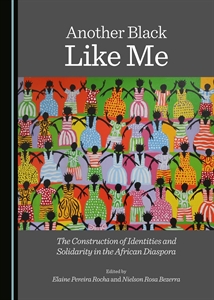
Book – Another Black Like Me: The Construction of Identities and Solidarity in the African Diaspora. Edited by Elaine Pereira Rocha and Nielson Rosa Bezerra
ISBN-13: 978-1-4438-7178-5
01 Feb 2015
Pages: 185-199


Book Description
This book brings together authors from different institutions and perspectives and from researchers specialising in different aspects of the experiences of the African Diaspora from Latin America. It creates an overview of the complexities of the lives of Black people over various periods of history, as they struggled to build lives away from Africa in societies that, in general, denied them the basic right of fully belonging, such as the right of fully belonging in the countries where, by choice or force of circumstance, they lived. Another Black Like Me thus presents a few notable scenes from the long history of Blacks in Latin America: as runaway slaves seen through the official documentation denouncing as illegal those who resisted captivity; through the memoirs of a slave who still dreamt of his homeland; reflections on the status of Black women; demands for citizenship and kinship by Black immigrants; the fantasies of Blacks in the United States about the lives of Blacks in Brazil; a case study of some of those who returned to Africa and had to build a new identity based on their experiences as slaves; and the abstract representations of race and color in the Caribbean. All of these provide the reader with a glimpse of complex phenomena that, though they cannot be generalized in a single definition of blackness in Latin America, share the common element of living in societies where the definition of blackness was flexible, there were no laws of racial segregation, and where the culture on one hand tolerates miscegenation, and on the other denies full recognition of rights to Blacks.

– Sample and contents
– Website: http://www.cambridgescholars.com/another-black-like-me